Ostrog Monastery – Discover One of the Greatest Sanctuaries in Montenegro

One of the most important pilgrimage destinations for Orthodox Christians worldwide is the Ostrog monastery in Montenegro. It is regarded as one of the most significant monasteries in Montenegro, in the Balkans, and the most visited Orthodox shrine in Europe.

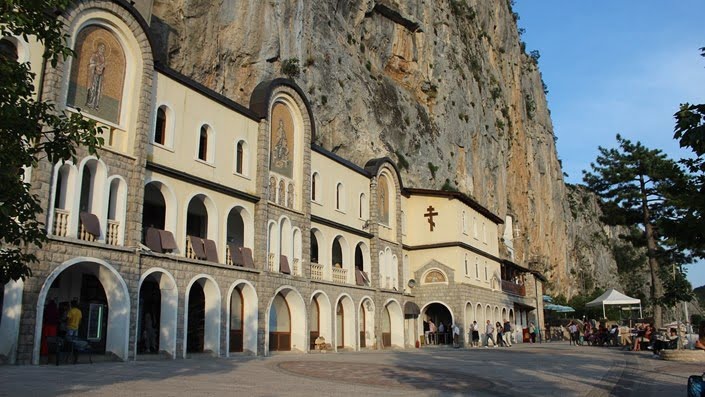
Built into the sheer rock face of Ostroška greda, at an altitude of 900 metres above sea level in the Municipality of Danilovgrad, the monastery is often described as a true masterpiece of nature and mankind. Its dramatic setting alone leaves a profound impression on every visitor.

The monastery was founded in the 17th century in honour of Saint Basil of Ostrog, whose relics rest within its walls. Saint Basil is believed to possess miraculous healing powers, drawing pilgrims who seek spiritual comfort, healing, and guidance to come to visit Ostrog.

Each year, hundreds of thousands of visitors from around the world, regardless of nationality or religious affiliation, make their way to Ostrog. During the summer months alone, more than 300,000 people visit the monastery in search of peace, faith, and inner renewal.

Find out what lies inside Ostrog Monastery, explore its history, learn about its miracles, and discover essential information for anyone planning a visit.

Ostrog Monastery History - When was Ostrog Monastery Built?

The history of the Ostrog Monastery is very important for the culture and the history of Montenegro. It is considered one of the most extraordinary and miraculous in the region, and this is how it all began.

Ostrog Monastery in Montenegro was established in the 17th century by Saint Basil (Vasilije), the Metropolitan Bishop of Herzegovina. It was built on the site of remote cave hermitages where Saint Isaiah of Onogošt lived an ascetic life.

Saint Isaiah built a cave church in the Ostrog cliffs called “The Presentation of the Holy Mother of God”, at a time when there was still no monastery complex or property. With the arrival of St. Basil, who was searching for a suitable place to lead an ascetic life himself, he chose these hard-to-reach hermitages as the foundation for the future monastery.

One of the main reasons for the nearly inaccessible Ostrog monastery location is to protect it from the Turkish invasion, which lasted more than 500 years across the Balkans.

Ostrog Monastery in Montenegro - From the 18th to the 21st Century

Throughout history, the monastery has been protecting the religious and national identity of the people in Montenegro, often providing refuge to warriors. In the 18th century the monastery also received an educational function because people in Ostrog established a school on the property.

At the beginning of the 20th century, the monastery suffered great damage due to a big fire but was rebuilt in the year of 1926. Today, the monastery still has the same look it had before.

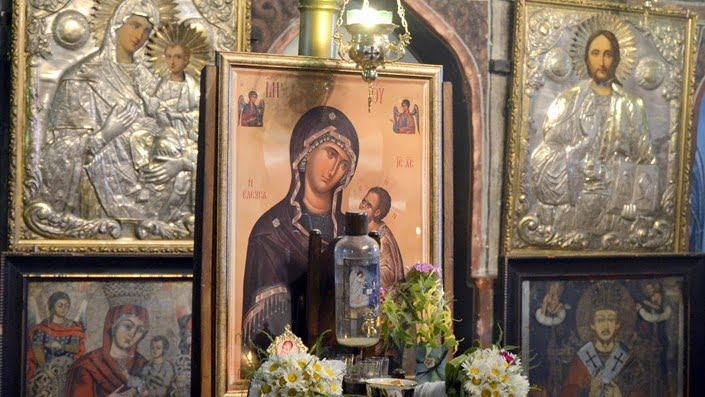
Luckily, the two churches in the caves did not burn in the fire and today they represent an authentic construction from the 17th century. The Russians donated the main door and two large icons, while the current interior was painted by Naum Andrić in the second half of the 20th century.

What is Inside Ostrog Monastery in Montenegro?

Inside Ostrog Monastery, you’ll find a spiritual complex built into a cliff, with two main complexes, each with important religious, historical, and cultural elements. There is the Upper Monastery with two cave churches and monastic residences, all accessed by a steep climb from the Lower Monastery.

Monastery

The Upper Monastery – the Resting Place of St. Basil of Ostrog

The Upper Monastery consists of the Church of the Presentation of the Holy Mother of God, where the relics of Saint Basil of Ostrog are being kept, and the Church of the Holy Cross.

One of the most interesting appeals in that area is the vine which grows out of the rock.

The Lower Monastery – the Endowment of the Archimandrite of Ostrog

St. Basil, besides taking care of the prayer and worship needs of the brothers, also took care to provide food sources and income for the inhabitants of the monastery. He was buying land from the peasants, where the Bishop built a boarding house for younger monks.

The core of the Lower Monastery was created with a large complex of monastic property composed of forests and arable land. The Church of the Holy Trinity, which is located in the center of the Lower Monastery Complex, is the endowment of the abbot of Ostrog, Archimandrite Josif Pavićević from the year of 1824.

It was built with the help of parishioners Bjelopavlić and Pješivac, with the blessing of the then Metropolitan and ruler of Montenegro, Petar Prvi Petrović Njegoš.

Ostrog Monastery Miracles and Other Chronicles

When it comes to the monastery miracles, there are many that are truly remarkable. The first miracle, among the many associated with Ostrog, is the extraordinary location of the monastery and the way it was built into an almost vertical rock face, high above the ground. Back in the 17th century, construction techniques were far less advanced than they are in the modern world.

One of the most famous miracles is said to have occurred in 1913, when a baby fell from the upper part of the monastery and remained completely unharmed. This story has been passed down to this day and continues to amaze people from around the world.

It is believed that the spirit of Saint Basil of Ostrog has helped many people heal in a manner similar to the miracles attributed to Jesus Christ, such as restoring sight to the blind, hearing to the deaf, and movement to those who were unable to walk.

Monastery

The Miracle of the Unactivated Grenade During the German Attack

During the II World War, in February of 1942, the German army bombed the Ostrog monastery in Montenegro with a single artillery grenade, which struck a stone wall above the Upper Monastery, shattered the door of the Church of the Holy Cross, but did not explode. The grenade split into two parts upon impact.

An expert examination later determined that the grenade was fully functional, but according to a common belief, Saint Basil did not allow it to explode and destroy the monastery. This grenade is still preserved in the Upper Monastery today.

The Apparitions Of Saint Basil From The Time Of His Death To The Present Day

The first recorded apparition of St. Basil took place seven years after his death, in the dream of the abbot Rafil Kosjerac. After that dream, the abbot opened the tomb and was confronted with a perfectly preserved body of the Saint and the specific incense of the basil.

The last such case that was written about in the media happened in 2015, while Metropolitan Amfilohije Radović served the liturgy. The diocese of Šavnik reported that people then briefly saw the figure of St. Basil of Ostrog.

Ostrog Monastery Pilgrimage – A Barefoot Walk in Ostrog

The well-known tradition among the pilgrims is to walk the 3 km from the Lower monastery to the Upper monastery barefoot. Pilgrims have to pray before entering the Church of the Presentation to Saint Basil of Ostrog.

They also donate clothing, blankets, or consumables like soap to the monks. The feast day is celebrated on May 12 every year, which is the date of the death of the St. Basil in the Gregorian calendar (29 of April in the Orthodox calendar) which is also known as the Saint Basil the Miraculous one.

Worship Services and Church Prayers in Ostrog

Each day, in the monastery there are worship services which are church prayers and rituals that are performed in order to get closer to God and Christ. Daily worship services are held in the Ostrog in the mornings, alongside the reading of the gospel, the sacred secret of anointing, and other religious rituals in the afternoons.

In the monastery of Ostrog, the act of anointing is regularly performed. The anointing originates from the apostles, as evidenced by many religious writings, and represents the anointing of the sick with holy oil in order to help the sick one to be united with God and Christ and to be healed.

Painting monastery

Visit Ostrog Monastery in Montenegro - Frequently Asked Questions

There are many stories of how the St. Basil of Ostrog has healed those who were sick. The Ostrog monastery is a holy place where many people come to seek salvation from St. Basil of Ostrog who is one of the most miraculous and beloved Saints in the Orthodox religion.

What Religion is Ostrog Monastery?

The Ostrog Monastery belongs to the Serbian Orthodox Church and is part of Eastern Orthodox Christianity. Even though it is an Orthodox monastery, it is widely visited by people of different religions and beliefs.

Ostrog Monastery Sleeping - What Accommodation Options are Available at Ostrog Monastery?

When it comes to the Ostrog monastery accommodation, at the property of the monastery, there are hundreds of available beds for an overnight stay. In the summer, if you don’t find an available bed, you can still spend the night in a central square of the monastery.

Ostrog Monastery Dress Code - What are the Rules for Ostrog Monastery?

Visitors to the Ostrog Monastery should dress modestly and cover their shoulders and knees. Women are advised to wear skirts and headscarves.

Silence and respectful behaviour are required, as the monastery is an active place of prayer and pilgrimage. Taking photos inside the churches is generally not allowed, and visitors should follow instructions from the monks. Donations are voluntary, and guests are asked to respect monastery property and religious customs at all times.

Is Ostrog Monastery Worth Visiting?

Yes, Ostrog Monastery is absolutely worth visiting, whether you are a pilgrim, a history enthusiast, or traveling through Montenegro. It offers a unique blend of history, faith, and once-in-a-lifetime setting – stunning cliffside architecture and breathtaking panoramic views. Despite potential crowds, visitors find the experience deeply moving, offering spiritual reflection and a memorable visual spectacle.

Ostrog Monastery Tickets and Entry Fee - How Much Does It Cost to Visit Ostrog Monastery?

There is no entrance fee to visit Ostrog Monastery or explore its grounds. The monastery is open to all visitors, regardless of religion or nationality. However, additional costs may apply depending on your mode of transportation, whether you choose a guided tour, meals, or make optional donations.

If you plan to stay overnight, basic accommodation is available at the Lower Monastery for a small fee.

Montenegro Ostrog Monastery Opening Hours - When is Ostrog Monastery Open to Visitors?

The Ostrog Monastery is generally open to visitors every day throughout the year, but specific times vary by season. During May to September, it is typically open from about 06:00 in the morning to 17:00 in the afternoon. From October to April, the monastery usually opens around 05:00 in the morning and closes around 16:00 in the afternoon.

If you’re planning a visit, it’s a good idea to check locally since the opening hours can vary slightly depending on religious services, special events, or seasonal changes.

Where Can you Park Near Ostrog Monastery?

You can park near the Ostrog Monastery at designated parking areas close by. There is parking near the Lower Monastery, commonly used by cars and buses, and a smaller parking area near the Upper Monastery, accessible via a narrow, winding road. Parking is generally free, but spaces near the Upper Monastery are limited, especially during peak season.

Ostrog Monastery - How to Get There from Porto Montenegro via Kotor?

Ostrog monastery location is one of the most beautiful ones. As the road climbs further towards the monastery, the extraordinary Bjelopavlići plains come into view, which is one of the most breath-taking landscapes you’ll get to see in Montenegro.

From Kotor to the monastery, you can take three routes. One of them is to go around the Kotor Bay, across Risan and then uphill to the road that goes from Trebinje to Nikšić, which is 15 kilometers away from the monastery.

The second route is the road which leads across Budva and near Podgorica to Nikšić. The third one is to travel from Kotor to Lovćen, through Njeguš and Danilovgrad to Ostrog. The same routes you can use if you are arriving from your accomodation in Porto Montenegro, the most luxurious places to stay in Montenegro, with the gorgeous platinum marina.

Don’t miss a chance to visit Ostrog, one of the most important religious sites and tourist attractions in Montenegro!