
Vero & Versa
Discover a collection of diverse yet integrated neighbourhoods at the heart of it all. Vero and Versa Residences have easy access to everything Porto Montenegro has to offer.
Explore

Discover a collection of diverse yet integrated neighbourhoods at the heart of it all. Vero and Versa Residences have easy access to everything Porto Montenegro has to offer.
Explore
Discover Porto Montenegro's newest neighbourhood, a thriving community designed around wellness, lifestyle and everyday convenience.
Explore

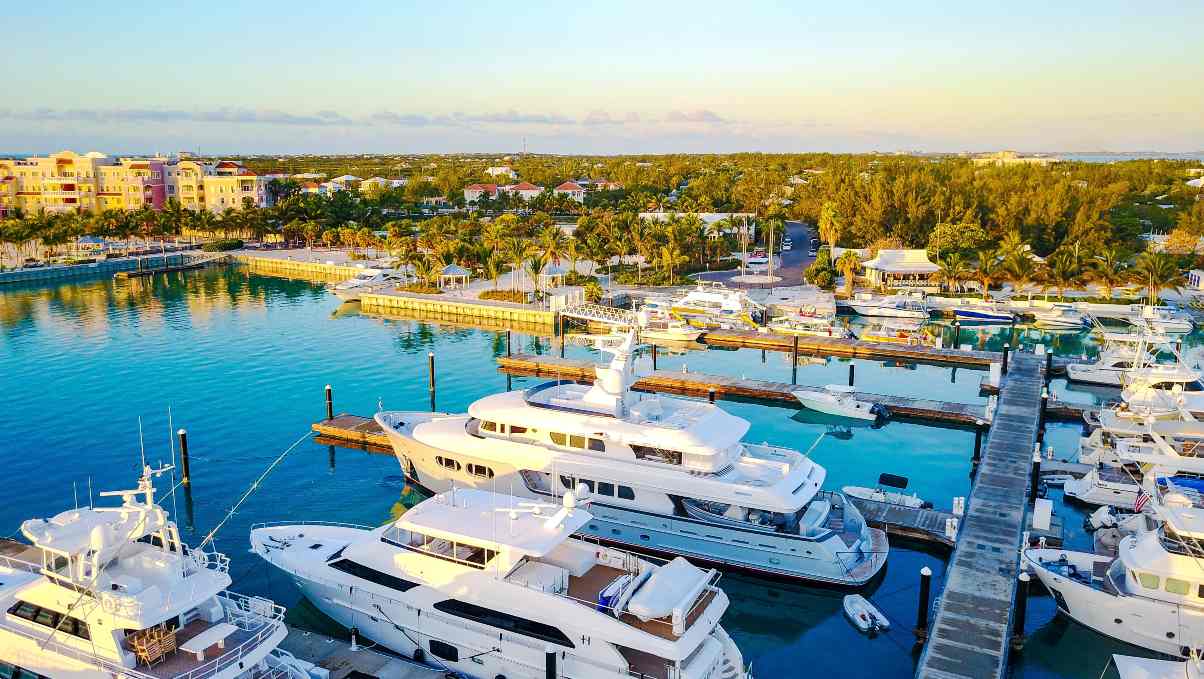
Yacht docking is one of those skills that looks effortless when done well and impossibly fiddly when it’s windy, busy, or you’re under watchful eyes on the quay.
Whether you’re learning how to dock a boat for the first time or polishing your technique on a larger vessel, the fundamentals never change: plan early, move slowly, and communicate clearly.
This guide walks you through how to dock a yacht in twelve crisp steps, shares practical tips for docking a boat, and answers the classic question – how should you approach a dock when docking your vessel?.
Along the way, you’ll find sensible docking boat recommendations on equipment, crew roles, and approach tactics – scalable from day boats to superyachts.
Docking a boat can seem intimidating, but with the right preparation, clear communication, and understanding of your environment, it becomes straightforward and safe.
Here are a few key steps to help you dock your boat safely and confidently.
Set your fenders, prepare docking lines, and brief your crew on their roles and safety.
Preparation beats improvisation. Fit at least three fenders per side (more on high‑freeboard boats), hung so their mid‑points meet the dock’s rub‑rail height.
Add a heavy “ball” fender at the bow if you’ll be coming in at an angle. Rig bow, stern, and spring lines on the side you expect to berth; snake the coils so they run free, and leave the bitter ends on top.
Allocate positions: helm, mid-ship line handler, bow, stern, and a spare roving fender. Your crew should know how to cleat off, when to take a turn vs make fast, and the golden rule – never place wrists or legs between the hull and the dock.
As for docking boat recommendations, carry at least two 10–15 m (⅜–½ in) warps, four cylindrical fenders, a bow fender, a sturdy boat hook, and chafe protection. A brief, calm pre‑docking chat avoids hot mics and hot tempers later.
Check wind direction, current strength, tide, and space at the dock before you start your approach.
Read the water and the rigging: flags, moored boat angles, ripples around pilings, and the drift of any surface debris reveal wind and set. Note the tide height and whether it’s rising or falling – this affects fender height and line length.
In rivers and tidal marinas, favour approaches against the dominant force (wind or current) so you keep steerage at minimal speed. Confirm the berth length and width, the presence of lazy lines or mooring pick‑ups, and any hazards (chain, shallow patches, power pedestals).
If the berth looks too tight, contact the marina for assistance or request a wider space – a quick call costs less than a scratched hull.

Visualise your route, entry angle, and stopping point — always have a Plan B if things change.
Before you move a metre, rehearse the path: from outer fairway to turning point to final stop with the fenders kissing the dock. Mark where you’ll break inertia and the precise point you’ll go to neutral.
Ideally, approach the dock into the prevailing force (wind or current) so the boat remains controllable at low speed; aim for a shallow angle to the berth, letting the bow close first, then bring the stern in with gentle throttle pulses.
Plan B might be to circle between piles, take an upwind holding pattern, or choose a different side‑to berth if the wind pipes up.
Use hand signals or radios to coordinate with your crew – silence or confusion can cause accidents.
Agree on a few clear hand signals before approaching the dock – for instance, an open palm can mean “hold”, a circular motion with the finger “take a turn”, and a downward gesture “make fast”.
Keep communication clear and calm throughout the manoeuvre. The helm should always know the crew’s status – short, precise confirmations like “mid-ships line secured” are enough. When using handheld radios, speak clearly and avoid unnecessary chatter. If the marina staff are assisting, agree in advance which line they’ll take first and whether the berth uses bow or stern pick-ups.
Come in at a 20–30° angle, using short bursts of throttle for control.
This is the heart of boat docking. Make way just enough to keep steerage – slow is professional.
A 20–30° approach lets the bow make gentle first contact (with a fender!), after which you can “hinge” the boat in by nudging astern and using the rudder or thrusters to bring the stern alongside. Use momentum sparingly; once you’ve got the hull parallel, stop the boat with a short reverse pulse rather than a steady drag, which can reduce rudder authority.
Rely on your bow/stern thrusters or twin engines to make precise corrections.
Think “tap, don’t hold”. Short pulses on bow or stern thrusters prevent battery drain and avoid blowing water under the dock.
On twin‑engine boats, differential throttle acts like a big, quiet lever: a brief port‑ahead/starboard‑astern twist will swing the bow.
Avoid big helm swings at dead slow – rudders need flow. If fitted, joystick modes are brilliant for micro‑adjustments, but treat them as helpers, not magic wands. Smooth gear shifts – neutral, tick‑over, neutral – keep everything composed.
Let the wind or current help, not fight you. Adjust your steering and speed accordingly.
Maintain a small ferry angle (slight crab) to hold your track when a crosswind wants to slide you off. If the wind is pushing you on the dock, approach further out and let it drift you gently in, fenders ready.
If it’s blowing you off, sneak in closer before turning parallel, then secure a mid‑ships spring quickly to pin the boat. With current, it’s usually safer to approach against it; you’ll have better control and time to stop.
Maintain awareness of nearby boats, docks, and obstacles. Avoid sharp turns or sudden power.
Eyes out and posture soft. Assign one crew member to scan for lines in the water, lazy‑line pick‑ups, swimmers, and dinghies. Maintain a cushion of space until the last controlled metre, especially when someone ahead is also manoeuvring. Abrupt throttle changes cause squat and prop walk to surprise you; measured inputs keep the boat predictable.
Ensure your crew calmly steps onto the dock to secure lines – no jumping for safety reasons.
Close the distance until stepping is effortless. If it isn’t, you’re not ready – reset the approach. Use a mid‑ships line first: hand it to the dock (or loop a cleat with a boat hook) and take a turn to hold the boat as you fine‑tune position. No one should leap, lunge, or try to fend off with hands or feet; that’s what fenders are for.
Tie bow, stern, and spring lines in the correct order to hold position.
Knowing how to tie a boat to a dock correctly is just as important as the approach itself.
The stabilising order is usually: mid‑ships spring (to stop fore‑and‑aft movement), then stern (to fix the transom), then bow. In strong on-dock winds, secure the upwind spring first.
Use proper cleat hitches; avoid incorrect knots or over-tight wraps that jam under load. In stern‑to (Med) mooring, set the stern lines crossed for lateral stability, then tension the bow pick‑up or anchor line to keep the stern just off the dock.
If you’ve ever wondered how to tie a boat to a dock safely in windy conditions, remember: it’s all about sequence, tension, and using proper cleat hitches rather than simple knots.
Inspect fenders, lines, and the yacht’s position. Adjust tension if the boat moves or the tide changes.
Walk the deck. Are fenders at the right heights, not squeezed under the rub‑rail? Are lines chafe‑protected, with fair leads that don’t cut across toerails or stanchions?
Revisit after 10–15 minutes; as engines cool and wind or wash settle, the boat may shift. If you expect a big tidal range, set springs long enough to accommodate it, or plan to retension later.
Turn off engines, secure electrical and water connections, and confirm the yacht is stable.
Neutral, engines off, keys removed. Connect shore power with the breaker off, then switch on and check the panel for correct polarity and load. Coil spare lines, stow boat hooks, and ensure the passerelle or transom gate is safe to use.
After completing all checks, close the fuel and water vents as appropriate, confirm ventilation in warm conditions, and secure the helm. A well-executed docking ends with order, not haste – professionalism is in the details.
Before we dive into vessel-specific guidance, here are some evergreen tips for docking a boat of any size. These apply whether you’re handling a nimble 30-footer or docking a mega yacht in a crowded marina.
Once you master the fundamentals of docking, it’s time to take your skills further. Discover luxury yachting locations worldwide where calm waters, stunning coastlines, and world-class marinas await.
Docking a motor yacht requires a combination of finesse, patience, and understanding how your vessel responds to wind, current, and throttle.
While every boat is different, a few key principles – smooth control, early adjustments, and measured use of thrusters – can make even tight marina berths manageable. Below are some expert tips to help you approach and secure your yacht safely.
Modern flybridge and sportscruiser hulls respond beautifully to split‑throttle inputs. With the wheel centred, a moment of port ahead and starboard astern will spin the boat neatly without building speed; reverse to stop the rotation.
Bow and stern thrusters are fantastic for the last metre, but pulse them – long, continuous runs can overheat motors and simply blow water where you don’t want it.
Many motor yachts carry more windage than you think; begin your turn earlier when a crosswind will try to kick the bow off. If you’ve got joystick control, use it as a fine‑tuning tool at the end of your approach rather than for the entire manoeuvre; you’ll stay better oriented to the forces at play.
Docking a mega yacht is a highly coordinated operation that demands careful planning, clear communication, and precise execution.
The size of the vessel amplifies every factor – wind, current, berth dimensions, and crew coordination – so preparation is key. In a world-class marina like Porto Montenegro Marina, with its deep-water berths and professional dock staff, following these best practices ensures a smooth and safe arrival for you and your guests.
When docking a mega yacht, planning scales with length.
Confirm berth dimensions, bollard positions, and water depth well in advance; agree on radio channels and hand‑signal conventions with the dock team.
Dynamic Positioning (DP) can hold you off while lines are run, but it’s not a substitute for situational awareness – prop wash can endanger tenders or divers. Establish a line sequence (often two springs, then sterns/bows) and appoint a conning officer to liaise between helm and deck teams. Consider tug assistance in exposed harbours, and keep guests clear of working decks until you’re made fast.
Docking rewards patience, preparation, and attention to detail. Even experienced captains can fall into these traps. Here’s what to watch out for:
These reminders may seem simple, but attention to fender height, throttle timing, and crew safety separates a controlled docking from a stressful one. Whether handling a motor yacht or a mega yacht in tight marina conditions, these small details make all the difference.

Like every skill at sea, boat docking becomes second nature with repetition, patience, and an eye for detail. Each approach teaches you something new about balance, timing, and control – lessons best learned in calm conditions before taking on a busy marina or stronger winds.
For captains who want to refine their manoeuvres in a world-class environment, the marina in Porto Montenegro offers the perfect setting.
Awarded Platinum status and recognised as Montenegro’s number-one marina, it combines deep-water berths with modern luxurious marina facilities, premium services, and expert on-site assistance. Created by sailors for sailors, Porto Montenegro delivers an effortless experience – from seamless berth reservation and 24/7 support to personalised care for both crew and guests. To discover everything the marina provides, explore our full range of marina services available year-round.
Practising how to moor a yacht here means learning in a safe yet technically diverse harbour, where calm waters meet Adriatic winds – an ideal blend for mastering control and confidence. It’s also a chance to immerse yourself in the region’s vibrant yachting culture.
Docking may start as a technical exercise, but over time it becomes an art – a calm, precise ritual that reflects both skill and mindset. And there’s truly no better place to perfect that art than at Porto Montenegro, where precision meets elegance on every approach.
For more insights into that world, discover the largest yachting events in Montenegro and across the world and learn how Porto Montenegro continues to play a central role in them. You can also explore the best marinas in the Mediterranean for superyachts to see how this destination compares to other iconic ports.
And if you’re planning your next voyage, our complete guide to yachting in Montenegro offers everything you need to navigate the Adriatic with confidence and style.
You now have a step‑by‑step framework for how to dock a yacht, plus focused advice for docking a mega yacht and everyday docking a motor yacht manoeuvres.
Remember the principles: deliberate set‑up, calm communication, and steady, reversible inputs.
When in doubt, reset and try again; there’s no penalty for taking another lap around the fairway. If you’d like tailored docking boat recommendations – from fender sizing to line materials for your specific hull and home marina – use this checklist as your starting point and refine it with experience.
Docking is a skill every captain refines over time. With the right mindset, communication, and awareness, even complex marina manoeuvres can be done smoothly. Take it slow, plan ahead, and soon, docking your yacht will feel effortless.
And when the summer season ends, the sea still calls. Discover the quiet beauty of winter yachting across the Mediterranean – a different kind of adventure for those who truly love life on the water.


