Lake

Skadar Lake National Park – Discover the Largest Lake in the Balkans

Skadar Lake National Park, located in Montenegro, is home to the largest lake on the Balkan Peninsula and is considered one of the most beautiful natural attractions on the entire peninsula.

Are you ready to experience the untouched, enchanting nature of this unique region?

Regardless of whether you have already visited Lake Skadar or are just planning to explore it, there are facts worth knowing about this inspiring beauty of Montenegro.

The national park stretches along the border of Montenegro and Albania, and the total area of ​​the lake is 369.7 km², of which about 221.8 km² belongs to the Montenegrin part.

Lake Skadar is the largest karst lake on the Balkan Peninsula and a natural crypto-depression, which means that parts of its bottom are below sea level. A special phenomenon is the sublacustrian springs, known as oka, of which there are about 30. The deepest among them, Radus, reaches a depth of up to 60 meters, although the average depth of the lake is about 6 meters.

Numerous islands on the lake hide the remains of monasteries, medieval fortifications and other testimonies of the rich historical and cultural heritage of Montenegro. The shores of the lake are rich in numerous capes and coves overgrown with reeds, which gives the National Park a special and authentic look, making it one of the most beautiful lakes in Montenegro.

Skadar Lake, known as Skadarsko jezero in Montenegrin, was officially added to the list of Wetlands of International Importance under the Ramsar Convention in 1996 and before that, in 1993 it was declared one of the National Parks in Montenegro . Since then it has been one of the most important sights of Montenegro. In order to really get to know Lake Skadar National Park, it is important to know its history.

History of Skadar National Park – Rich Cultural and Historical Heritage

The Skadar Lake National Park was once a part of the medieval Zeta, one of the early state formations on the territory of today’s Montenegro. At the end of the 15th century, there was a great Ottoman invasion, when the Turks occupied the area of ​​Shkodra.

During the period of Ottoman rule, after the 15th century, fortresses like Besac above the village of Virpazar were built in the vicinity of the Skadar lake, while the Lesendro fortress on the island near Vranjina was built in the 19th century during the reign of Peter II Petrović Njegoš. Today, these monuments are some of the most visited sights associated with the Skadar Lake National Park.

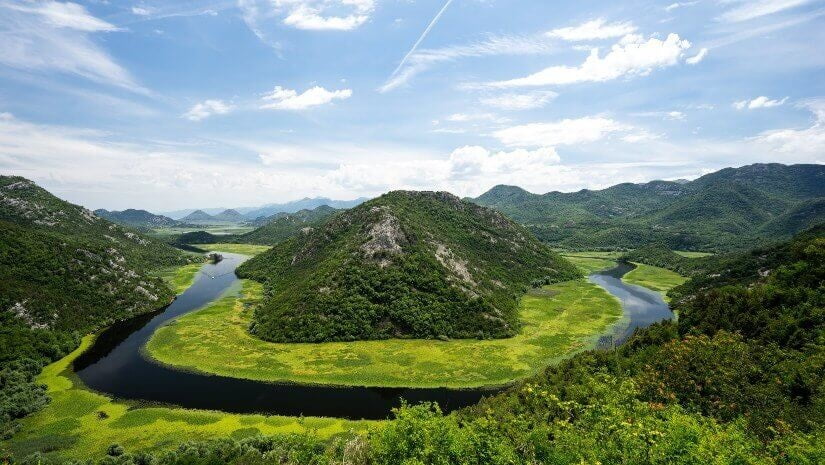
Stunning view at Lake Skadar and nature around it.

The fall of the Ottoman Empire and the independence of Montenegro

After the Ottoman Empire’s fall, Skadar was still incorporated into Albanian administration (as Lake Shkoder) but when the Montenegrins finally obtained their complete independence, by the early 20th century, King Nikola Petrovic had set up his court in the town of Rijeka Crnojevica, located at the shore of Lake Skadar Montenegro.

On the lake’s surface, the remains of the city of Obod can be frequently seen. The establishment was once a printing dome, famous for the first printed book in Southern Europe, called “Oktoih”.

Today, tourists can enjoy many interesting forts, medieval churches and monasteries of Montenegro, archaeological sites and traditional, rural architecture.

Village

The enchanting natural beauty of the Skadar National Park

These parts of our country truly stand out for their magnificent and rich fauna and flora. Numerous animal and plant species can be seen and admired.

The Authentic Animal Species

With more than 290 bird species, Skadar National Park is known to be a real paradise for birds. The significant majority are endangered and rare ones like moorhens, wild ducks, grebes, curly pelicans, yellow, white, and grey herons, and many more.

In the Lake Skadar basin, there are more than 48 fish species such as flathead mullet, mullet, eel, etc. You can find numerous species of amphibians, as well. The most important ones are green, big and tree-toad, Skadar green toads, smooth newts, etc.

This famous site is also home to various reptile species. Some of the most important of them are garter snakes, house geckos, brown, rock and Karst lizards, and many others.

Nature at Lake Skadar

The vegetation and floristic diversity of Lake Skadar Montenegro

The ecosystem of Skadar National Park is very diverse. When you include most of the floral species, you can say that the ecosystem is of a sub-Mediterranean type with wetland biotopes and freshwater.

In Skadar Lake National Park Montenegro harbours and cultivates many medicinal, aromatic, melliferous and endemic floral species including Dalmatian greenweed, rosemary, saffron, gentle snake’s head, wild yellow tulip, moon carrot, laurel, fritillary, pea-tree, etc.

In floodable areas, there are many different species of willows. In the northern part of the land, you can find trees like Skadar oak – protected as endangered.

Boat

The classical karst terrains of Skadar Lake Montenegro basin

As a part of the Dinariedes mountain chain, known for its karst terrains, Skadar Lake National Park includes large underground caves, landforms and conduits.

The most interesting facts about this area are its hydrological phenomenons such as swallow holes, typical karst and intermittent springs. During summertime, many of these springs dry up for Lake Skadar to retain a huge amount of freshwater.

What are the main towns around Skadar Lake?

The main towns around Lake Skadar are Virpazar, Rijeka Crnojevića, and Vranjina on the Montenegrin side. Virpazar is the most popular base for visitors, known for boat tours and easy access to the lake. Rijeka Crnojevića is smaller and more scenic, famous for its historic bridge and viewpoints, while Vranjina sits at the lake’s entrance near Podgorica.

Skadar Lake National Park – Things to Do on a Tour of Lake Skadar

Besides its miraculously beautiful nature, if you are a true adventurer who’d love to explore this area from a different point of view, here are some of the most interesting things to do while on the Skadar Lake tour!

Boat sailing on the water

Skadar Lake Boat Tour – Explore the Area First-Hand

The Skadar Lake boat trip, known also as the Skadar Lake cruise, is one of the most popular attractions in this part of Montenegro. It usually lasts about 2 or 3 hours, and it is conducted by a highly skilled team of professionals.

You can start your Lake Skadar boat trip from Virpazar which happens to be the main gateway to the lake. The best route for the cruise is passing by Lessendro fortress, built in the year 1843.

Passing by the fortress, you can enjoy the wonderful, untouched nature with many authentic animal and plant species. Many local organizations offer their traditional cheese, homemade brandy and domestic wine, completing the overall impression of this amazing attraction.

Skadar Lake National Park Hiking - What Is It Like to Go Hiking around Skadar Lake?

Besides the boat tours, there are interesting hiking routes to explore the shore.

Karuc is a picturesque fishing village on the shore of Lake Skadar, where you can start your walk across ancient villages, trying out delicious domestic honey and wine, straight from the local producers. Walking back to Cetinje, you can enjoy the breath-taking view on Rijeka Crnojevica bridge over the lake.

Skadar Lake Fishing - A Popular Local Tradition

Fishing is probably one of the most popular activities on the lake, especially among local fishermen. When it comes to Montenegro Lake Skadar is known to have numerous species of fish such as carp, eel and bleak and fishing for rare and fresh-water types of fish is very popular among tourists as well.

Visit Ethno Village on Skadar Lake

For those looking to experience Montenegrin tradition and heritage up close, visiting the ethno village Morača on Skadar Lake is a must. This charming settlement is designed to reflect the rustic lifestyle of the region, with traditional stone houses, wooden terraces, and breathtaking views of the lake.

Here, you can enjoy authentic Montenegrin hospitality, taste locally sourced organic food, and sip on homemade wines and rakija, made using centuries-old methods. The villagers often share stories about their ancestors and the history of the region, allowing visitors to gain a deeper appreciation of Montenegro’s rural culture. Whether you’re looking for a peaceful retreat or a cultural experience, ethno village Morača offers a unique glimpse into the traditional way of life by the shores of Lake Skadar.

Kayaking Skadar Lake – Explore the Nature While Being Active

If you love adventure, Skadar Lake kayaking is an excellent way to explore Montenegrin natural beauty while staying active. The lake’s vast surface, interwoven with narrow channels and hidden inlets, creates a perfect setting for paddlers of all skill levels.

Gliding through the calm waters, you can get close to some of the lake’s most picturesque areas that are otherwise inaccessible. You’ll paddle through dense reeds, under arching willow trees, and past small floating islands where birds nest. The tranquillity of the lake, combined with the chance to see rare bird species up close, makes kayaking an unforgettable experience.

For those seeking a more challenging adventure, longer kayaking routes allow you to explore the remote corners of the lake, including the famous island monasteries and abandoned fortress ruins. Many guided tours also include stops at secluded beaches where you can take a break and enjoy the pristine nature around you.

Lake Skadar Swimming – Refresh Yourself in This Majestic Lake

After a day of exploration, nothing feels better than taking a refreshing dip in Lake Skadar. The lake’s clean, clear waters provide the perfect setting for a relaxing swim, especially during the hot summer months when the temperatures can rise above 30°C.

Some of the best swimming spots include Murici Beach, a peaceful sandy shoreline surrounded by untouched nature, and Pjesacac Beach, a hidden gem with crystal-clear waters and a stunning view of the surrounding hills. If you’re exploring the lake by boat or kayak, you can also find small, secluded bays where you can enjoy a private swim away from the crowds.

Since Lake Skadar is a freshwater lake, swimming here is a different experience from the salty Adriatic coast. The water is pleasantly warm in the summer, and its rich biodiversity makes it a unique and rewarding place to take a dip. Whether you’re looking to cool off after a long hike or simply enjoy the serene beauty of the lake, swimming in Skadar Lake is an absolute must-do.

Skadar Lake National Park Camping

Camping at Skadar Lake National Park is only permitted at designated campsites or on private land with permission, mostly around Virpazar and nearby villages. Wild camping is not allowed, as the area is a protected wetland.

Skadar Lake National Park Weather - What Is The Best Time To Visit Skadar?

The best time to visit Skadar Lake National Park is spring (April–June) and early autumn (September–October), when the weather is mild and nature is at its most vibrant. Spring is ideal for birdwatching and lush landscapes, while autumn offers warm days, fewer crowds, and excellent conditions for boating and hiking. Late spring and early autumn are also the best periods for camping, as temperatures are pleasant and wildlife is most active.

Summer (July–August) is hot and busy, making it best for water activities but less comfortable for exploring. Winter is quieter and cooler, appealing mainly to birdwatchers rather than general sightseeing.

Skadar Viewpoint - Where is the best place to see Lake Skadar?

The best places to see Lake Skadar are above the lake, where panoramic viewpoints reveal its full scale and wetlands. Pavlova strana viewpoint is the most famous, offering a sweeping bend of the river and classic postcard views.

Rijeka Crnojevića combines scenic overlooks with a charming old bridge and riverside atmosphere, while Virpazar is ideal for seeing the lake from the water via boat or kayak. For quieter, elevated vistas, villages like Godinje and Limljani also deliver beautiful viewpoints.

How much is the Skadar Lake National Park entrance fee?

Similar to the entrance fee for Durmitor National Park, visitors to Lake Skadar are required to pay around €5 per person per day. The fee applies to most visitors and helps support conservation and park maintenance. Children may be eligible for reduced fees or free entry, depending on age. It is recommended to check the current entrance fees and rules in advance, as prices and conditions may change seasonally.

Visiting Skadar Lake from Porto Montenegro Bay – the fastest route

If you are staying in Porto Montenegro, one of the most luxurious marinas on the Adriatic coast, you can get to Skadar Lake National Park by driving through Kotor, Budva or Cetinje to Rijeka Crnojevica.

The route is 28,3 kilometres long by exquisite roads of Montenegro and shouldn’t last longer than 1 hour and 45 minutes, by car. There is the option of travelling by bus or a taxi as well, it is up to you to decide.

Skadar Lake Montenegro is definitely one of the most interesting attractions to visit since it is the largest lake in the Balkans, and one of Europe’s top bird habitats, blessed with untouched nature, island monasteries, clear waters, and beautiful ancient Montenegrin villages worthy of your time!

Secret Link